Posts

Showing posts with the label iec320 power cords

Buy IEC320 Power Cords, IEC Cable, IEC 320 C13 Cord & IEC 320 C14 Cable - SFCable
Image
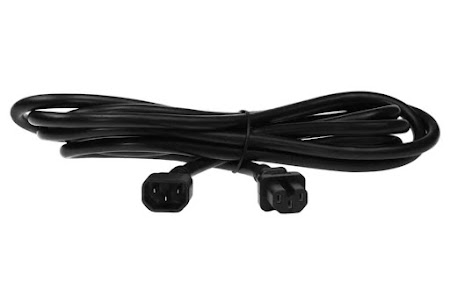
EC320 power cords are used in computer systems, data centers, and power distribution units. SF Cable stocks different kinds of IEC320 (also known as IEC60320) power cords including C14 to C13 Power Cords, C14 to C15 Power Cords, C14 to C19 Power Cords, C14 to C5 Power Cords, C14 to NEMA 5-15 Power Cords, C15 to C20 Power Cords, C20 to C13 Power Cords and C20 to C19 Power Cords. You can select the most appropriate power cord according to your requirements from the variety of colors and lengths available. At SF Cable, we have everything you need when it comes to cables and cords. We provide high quality IEC320 power cords at low prices by sourcing them directly from ISO 9001:2000 certified manufacturers.

Is it possible to Recycle Power Cords?

A power cord alternatively known as a  power cable  provides power to the computer, monitor, printers, and other components. If you spend a few minutes to clean out your console box you are sure to find at least a few cords you no longer use. If they are in working condition, you can donate them to someone. But if they no longer work there are various ways you can recycle them. And in this article, we are going to talk about the possible ways to recycle power cables. Recycling Power Cords The best way to recycle extension cords and any other type of  power cords  is to look for an electronics recycler in your area. Most of the electronics recycling programs would welcome all your power and extension cords that were compatible with your old electronic devices and any additional electric cords and cables. If you look at their construction, most of the power cords are made of copper or aluminum. These metals are highly recyclable. These metals in the cord...

Significant Insights on Power Cords and Plugs That You Must Have!

Image
You use power cords for sure. But, do you know what standardizes them and what makes them useful for the purposes you want? The International Electrotechnical Commission – abbreviated as IEC is the body responsible for providing the Power Cords with the standardization based on their specifications. Let’s take  IEC320 Power Cords  for example. The term “IEC 320” refers to the electrical specification of that power connector. IEC rates the IEC 320 receptacles for 6 to 10A at 250 VAC. So, most of the accessory power cords come with the plug that fits into instruments but whether or not their end will fit to the power outlet depends on the country and the device that you use. When it comes to producing power cords for international manufacturing, producing one instrument with common power receptacle along with the right power cord is more effective than producing different models. Until now, we have talked about several different types of power cords. Today, we will be ...

The History of IEC power cords

Image
Do you know what is actually running this whole world of internet, cinematics and computer science? It is power cords! If you don’t believe this fact, just unplug your system’s power cord. You will see a good for nothing dark screen because it is turned off. Power is still there your tools and systems are there. Still, you will not be able to use them and do anything without power cords. So, with that assertion, we can say that Power Cords is one of the most crucially important tools. It is supplying energies from generations powering appliances for decades. Today there are a lot of different categories of IEC power Cords, which are technically advanced than its predecessors. Power cords have seen drastic changes in this long course of time. Constant engineering and reengineering has made it more technically advanced, power savvy and secure to use. The latest and most modernized member of this power cord clan is IEC320 power cord . It is always interesting to go through the h...

Power Cords : The Lungs of Our Electrical World

We cannot separate electricity from our lives. Majority of our day-to-day activities are either contingent on machines or electricity. Electrical supply is inevitable for machines. An electrical appliance requires a means to stay connected with the grid. A metal conductor sheathed inside a poly vinyl chloride insulator known as a power cord is that means. Power cord, power connector, mains cable or line cord – call it with any of those names but the purpose it serves would not change. These power cords allow us to build a system of temporary connection. Using them, we can connect our electrical appliance with the wall socket or an extension board. It has two ends. The receptacle attaches one of those ends and the socket installs the other end. This arrangement is flexible and absolute. Some appliances are purely power driven. They always need the electrical supply for its operation. For connection with the mains electrical supply line, these appliances require  power cords . ...

Wireless Future: Will We be Witnessing One Soon?

The rate at which technology is expanding, it isn’t a surprise on how people have started imagining things that only sounded like magic till now. But where’s the line that separates this imagination? What is rational and what is to be deemed as ‘too demanding’ for the contemporary world and its inventions? Talking of technology, the world today can easily be termed as the ‘gadget world’, given the astonishingly high rates at which gadgets are being developed, manufactured, and ultimately exploited by the end users. Electronic products like   iec320 power cords   are still very much in demand. So, we have everything up to date, working at lightning speed than where’s the scope for a hope? What about gadgets without cables to provide them power or charge them? Sounds dreamy and convenient at the same time, doesn’t it? Let’s try to understand if that’s possible, and if yes, how and when? How far are we? Though it seems to be a too demanding debate, but it’s not something ...